
Instacart’s AI-Enabled Pricing Experiments May Be Inflating Your Grocery Bill
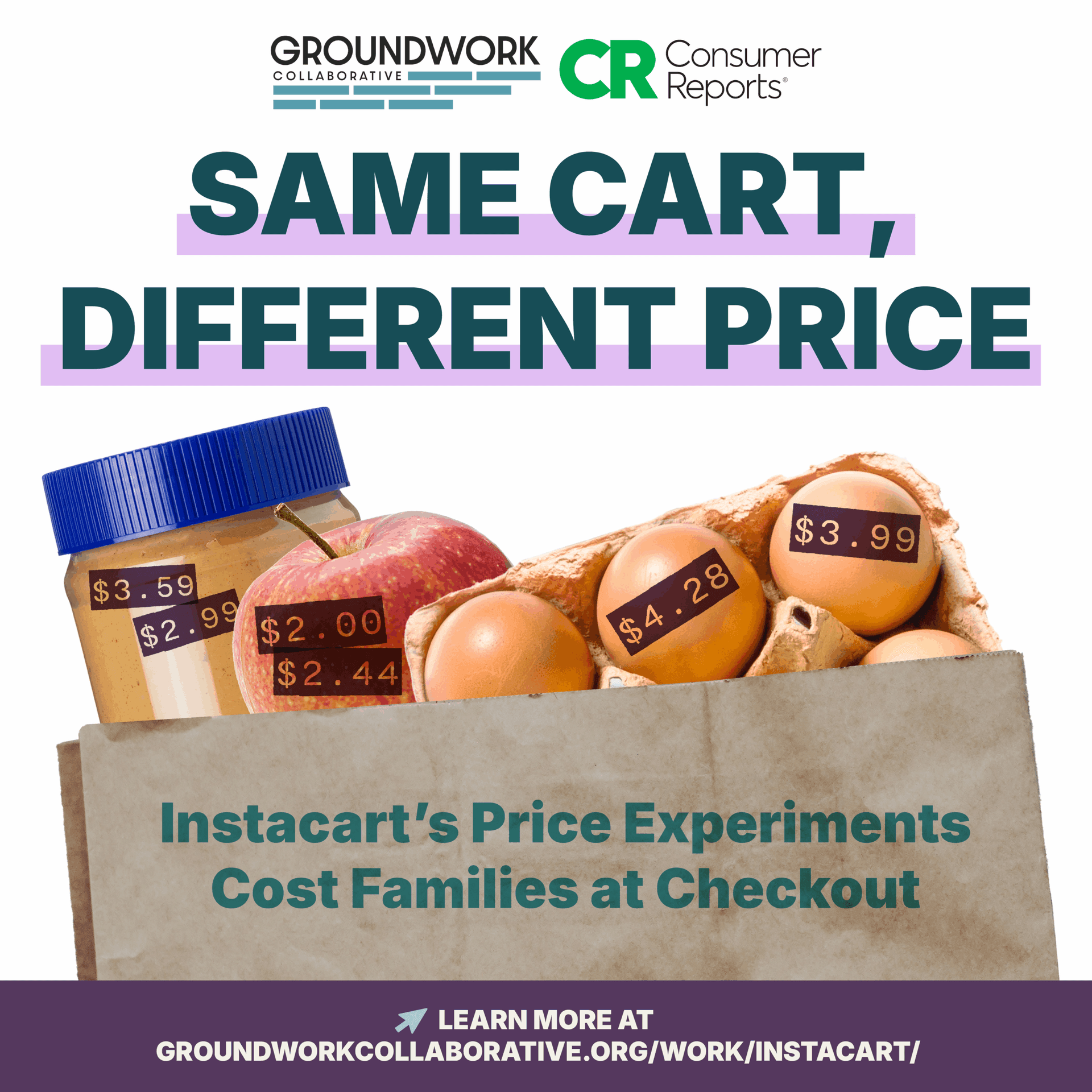
Groundwork Collaborative, Consumer Reports, and More Perfect Union conducted an independent experiment involving 437 shoppers in live tests across four cities to determine if Instacart is experimenting with pricing and how costly it is for shoppers. The results show that Instacart quoted prices to some consumers that were up to 23% higher than those quoted to other consumers for the exact same grocery item from the exact same location, at the exact same time. Instacart offered as many as five different sales prices for the exact same grocery item, in the exact same store, at the exact same time. The average difference between the lowest and highest prices was 13%. The study found that overall Instacart basket totals varied by an average of about 7% for the exact same items from the exact same locations, at the exact same time. A household of four will spend roughly an extra $1,200 per year for groceries on Instacart if they are exposed to the average fluctuations in total basket prices observed in this study.
“ Two shoppers who are buying the exact same item from the exact same store at the exact same time are getting different prices,” said Lindsay Owens, executive director of the Groundwork Collaborative. “The data really backs up how extraordinarily pervasive this is.”
On item after item, the volunteer shoppers found significant differences. In a Target in North Canton, Ohio, some shoppers were charged $3.59 for a jar of Skippy peanut butter that others could get for $2.99. At a Safeway in Seattle, some people paid $3.99 for a box of Wheat Thins while others paid $4.89. And at a Target in St. Paul, Minn., some people were charged $4.59 for a box of Cheerios that others could get for $3.99.
Here’s a link to the Consumer Reports article:
2 Comments